
The Terezín Collection
During World War II, the Terezín ghetto became one of the main places of suffering and death for Jews from the Czech lands and several other European countries. Of the approximately 150,000 prisoners, more than 30,000 died between 1941 and 1945 as a result of starvation, poor hygiene, overcrowding, and disease. Another 90,000 were deported to ghettos and extermination camps in the east. Only about 4,000 of them returned. Many original documents of the Jewish “self-government” were destroyed by order of the Nazis at the end of the war. However, even during the existence of the ghetto, several individuals and groups of Jewish prisoners decided to save the documents, and some of the survivors continued to do so after the war. The archival material on the history of Terezín is now divided among several archives around the world. The Terezín collection of the Jewish Museum in Prague has become one of the main sources for every researcher studying the history of the ghetto and the fate of Jews from Bohemia and Moravia. Between 2009 and 2012, with the kind support of the Claims Conference, the collection was completely digitized and recatalogued. This online exhibition focuses on some of the main events and issues in the history of the ghetto. It also provides an overview of the types of documents found in the Terezín collection. The exhibition was created by Magdalena Sedlická, Wolfgang Schellenbacher, and Michal Frank.
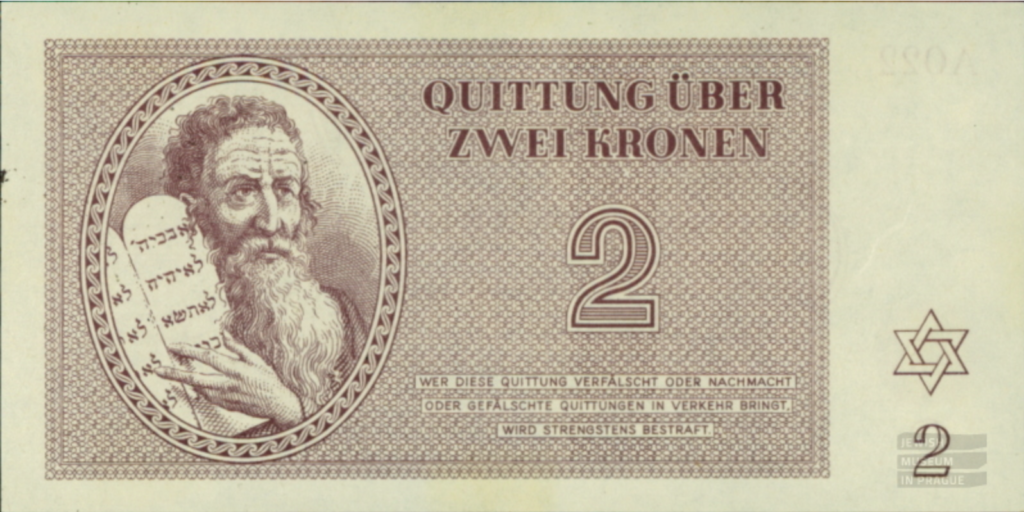
[Illustration: Ghetto money from Terezín]
Published : June 03, 2025