Logo

Online Primary Sources

  • Home
  • All Sources
  • About
  • Newsletter
Filter by
PeriodGeographical areaInstitutionTypeLanguage
  • 15th century (1)
  • 16th century (1)
  • 17th century (1)
  • 18th century (1)
  • 1920s (1)
  • 1930s (1)
  • 19th century (2)
  • 20th century (7)
  • 21st century (4)
  • Great Patriotic War (1)
  • Russia's war against Ukraine (3)
  • Soviet Union (2)
  • World War II (2)
  • Alsace (1)
  • Belorussia (1)
  • Central Europe (2)
  • Czechoslovakia (1)
  • Eastern Europe (3)
  • Israel (1)
  • Kharkiv (1)
  • Lithuania (1)
  • Poland (3)
  • Russia (2)
  • Soviet Union (1)
  • Ukraine (10)
  • Ukraine Occupied Territories (2)
  • USA (2)
  • Freie Universität Berlin (1)
  • German Historical Museum (1)
  • Harold B. Lee Library, Brigham Young University (1)
  • Kule Folklore Center, University of Alberta (1)
  • Leyzer Burko (1)
  • Lysiak-Rudnytsky Ukrainian Studies Programme (1)
  • Max Weber Stiftung (MWS) (1)
  • Peter and Doris Kule Centre for Ukrainian and Canadian Folklore at the University of Alberta (1)
  • Private Initiative (3)
  • Sectoral State Archive of Security Service of Ukraine (1)
  • The Yosl and Chana Mlotek Yiddish Song Collection at the Workers Circle (1)
  • Ukraina Moderna (1)
  • Ukrainian Philanthropist and Entrepreneur Khrystyna Khranovska (1)
  • “Remembrance, Responsibility and Future” Foundation (1)
  • Audio (5)
  • Database (1)
  • Doc file (1)
  • E-book (1)
  • Image (4)
  • Interactive map (1)
  • Links (1)
  • Transcript (10)
  • Translation (10)
  • Video (4)
  • Bosnian (1)
  • Czech (2)
  • English (8)
  • French (1)
  • German (3)
  • Norwegian (1)
  • Polish (1)
  • Russian (4)
  • Ukrainian (6)
  • Yiddish (2)

10 sources found in the database

for UkraineTranscriptTranslation
  • Yiddish Dialect Online-Dictionary


    Leyzer Burko

  • "Soviet Survivors of Nazi Rule: The First Testimonies" Database


    Max Weber Stiftung (MWS)

  • War Diaries: Unheard Voices of Ukrainian Children


    Private Initiative

    Ukrainian Philanthropist and Entrepreneur Khrystyna Khranovska

  • Eyewitness Accounts of the Russian-Ukrainian War


    Peter and Doris Kule Centre for Ukrainian and Canadian Folklore at the University of Alberta

    Private Initiative

  • “In the Thunderstorm of War” - Ukrainian Collection of Interviews with Professional Historians, Anthropologists, and Ethnologists in the War


    Lysiak-Rudnytsky Ukrainian Studies Programme

    Ukraina Moderna

  • Archives of Repression: Personal Letters in ex-KGB Archives in Kyiv, 1938-1947


    Kule Folklore Center, University of Alberta

    Sectoral State Archive of Security Service of Ukraine

  • Yiddish Song Collection


    The Yosl and Chana Mlotek Yiddish Song Collection at the Workers Circle

  • SLOVO HOUSE, Kharkiv - Story of the House and its habitants


    Private Initiative

  • Forced Labor, 1939-1945 - The Interview Archive


    “Remembrance, Responsibility and Future” Foundation

    Freie Universität Berlin

    German Historical Museum

  • History of Ukraine: Primary Documents


    Harold B. Lee Library, Brigham Young University

  • «
  • ‹
  • 1
  • ›

SLOVO HOUSE, Kharkiv - Story of the House and its habitants


Institution

Private Initiative

Url

http://proslovo.com/en#15/50.00892/36.23515/-17.6/45

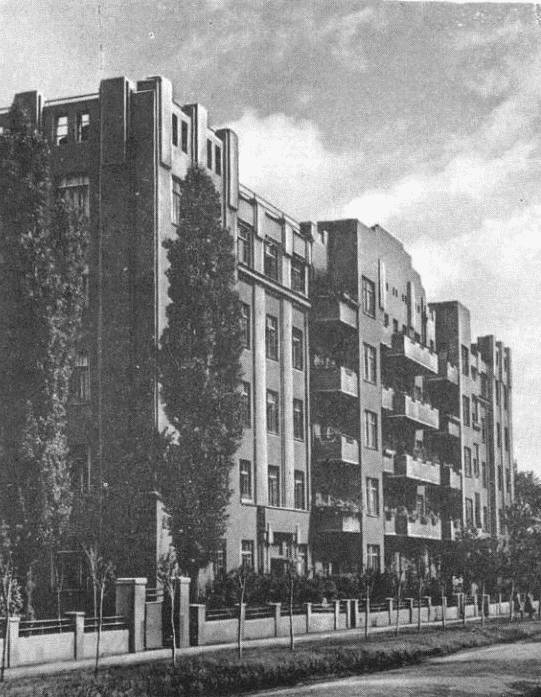
“Slovo” - residential house for cultural figures of Ukraine, during many decades of 20th century it was populated by around 200 of notable writers, playwrights, literature critics, translators, actors and actresses, artists, sculptors.

From 1919 until 1934 the capital of Soviet Ukraine was located in the city of Kharkiv. Ukrainiazation policy conducted by Soviet power in 1920-s, lead to cultural burst and popularity of Ukrainian language. Here, in Kharkiv, new publications emerged, numerous literature organizations were created, discussions and gathering were held. But poor living conditions provoked intelligentsia to ask the government to provide them with proper housing.

Idea to build cooperative house was born in the middle of 1920s in literature organization of peasant writers “Plug” [meaning “Plow”]. Literature men created cooperative and name it “Slovo” [meaning “Word”]. They turn to the government for financial help, the project was approved. Construction began in September 1927 not far from city center, in the uphill region of Kharkiv. By the original idea of architect Mytrophan Dashkevych, the house was designed in form of “C” letter – in Cyrillic alphabet it is first letter of “Слово” [ “Slovo” = ”Word”].

At the end of 1929, new habitants hurried up to move into their apartments, in order to celebrate New Year of 1930 in their new homes. Though central heating was installed later. Living conditions were luxury by that times: 3 or 4-room apartments, high ceilings, big windows, place for tanning on the roof. “Slovyans”, that's how residents of “Slovo” were called, had their own garden, sport playground, catering, laundry and kindergarten. Among famous residents of 1930-s were Ostap Vyshnya, Mykola Hvylyovyi, Volodymyr Sosiura, Pavlo Tychyna, Myhail' Semenko, Mike Jogansen, Anatol' Petrickiy, Vasyl' Sedlyar, Ivan Padalka.

But at the end of 1920-s Ukrainization policy had been cut down, and already in 1932-32 there began massive arrests of intelligentsia. By 1940 Stalin terror touched 40 out of 66 apartments of “Slovo” House, most of arrested were executed. During World War 2 , German senior military officers were quartered in “Slovo”. After the war men of literature and art return from evacuation and start restoring cultural life of Ukraine in Kharkiv. After Kyiv is freed, most of them move there though. Natalya Zabila, head of Writers association, reclaimed most of apartments, that were taken by some intruders. In the 1950 and couple of decades later “Slovo” house remains center of cultural life of Kharkiv city. Now it is regular residential house, though few of descendants of prominent artists still live here.  


Type

ImageTranscriptTranslation

Geographical area

KharkivUkraine

Period

1920s1930s20th century

Language

CzechEnglishUkrainian

Keywords

actorsarchitecturecooperative-housecriticscultural-lifeintelligentsiaplaywritersstalin-terrortranslatorsukrainiazation-policywriters

Published : March 24, 2022

Share this source

Send by email

Share this source by email or save it by sending the data to your mail box.

Newsletter

Receive the latest sources each month

By clicking on the Subscribe button, you confirm that you have read our Data Protection policy.
Logo cnrsLogo ehessLogo cercec

The Online Primary Sources database is curated by
the french Centre for Russian, Caucasian and Central European Studies (CERCEC), a CNRS-EHESS joint research unit.

  • Credits
  • Legal Notice
  • Data Protection