Logo

Online Primary Sources

  • Home
  • All Sources
  • About
  • Newsletter
Filter by
PeriodGeographical areaInstitutionTypeLanguage
  • 17th century (1)
  • 18th century (1)
  • 1917 (1)
  • 1918 (1)
  • 19th century (8)
  • 20th century (9)
  • 21st century (3)
  • Imperial Russia (3)
  • Pre-Revolutionary Period (1)
  • Revolution (1)
  • Russia's war against Ukraine (1)
  • Soviet Union (4)
  • World War 1 (1)
  • World War II (1)
  • Armenia (2)
  • Azerbaijan (1)
  • Bashkortostan (1)
  • Bielorussia (1)
  • Ekaterinburg (1)
  • Estonia (1)
  • Georgia (1)
  • Imperial Russia (1)
  • Kazan (3)
  • Kazan Province (1)
  • Lithuania (1)
  • Novosibirsk (1)
  • Poland (1)
  • Russia (8)
  • Russian Empire (1)
  • Soviet Union (1)
  • St-Petersburg (1)
  • Tatarstan (12)
  • Turkestan (1)
  • Ukraine (1)
  • Ural (1)
  • Uzbekistan (1)
  • Volga Region (1)
  • Volga-Kama Region (1)
  • German Digital Library (1)
  • Institute of History Sh. Sh. Marjani, Academy of Sciences of the Republic of Tatarstan (1)
  • Kazan Federal University (1)
  • Kazan Innovative University named after V.G. Timiryasov (1)
  • Khuzur Publishing House (1)
  • National Library of the Republic of Tatarstan (3)
  • National Library of Uzbekistan (1)
  • Private Initiative (1)
  • Russian National Library (1)
  • University of Toronto Libraries (1)
  • Audio (1)
  • E-book (2)
  • Image (4)
  • Pdf (6)
  • Telegram channel (1)
  • Video (1)
  • Armenian (1)
  • Azeri (1)
  • Bashkir (1)
  • Belarusian (1)
  • English (3)
  • Estonian (1)
  • Georgian (1)
  • Lithuanian (1)
  • Polish (1)
  • Russian (9)
  • Tatar (7)
  • Ukrainian (1)
  • Uzbek (1)

12 sources found in the database

for Tatarstan
  • "Groza Media/ Storm Media" Telegram Channel - A Newspaper for Students in Kazan, 2022-today


    Private Initiative

  • Agnès Nilüfer Kefeli, Becoming Muslim in Imperial Russia - Conversion, Apostasy, and Literacy, 2014 (Book)


    German Digital Library

  • "The Journal of Digital Technologies and Law" (2023-today)


    Kazan Innovative University named after V.G. Timiryasov

  • Tatar Book Collection


    Institute of History Sh. Sh. Marjani, Academy of Sciences of the Republic of Tatarstan

  • Digital Library of Tatar Theological Heritage


    Khuzur Publishing House

  • Uzbek Rare Editions and Manuscripts Database


    National Library of Uzbekistan

  • Tatar & Bashkir Newspapers (1811-1945)


    Kazan Federal University

  • "Izvestiia Vserossiiskogo Musulmanskogo Voennogo Shura", Kazan (1917-1918)


    Russian National Library

  • Collection of Tatar Newspapers, Journals & Magazines (1811-1918)


    National Library of the Republic of Tatarstan

  • Tatarstan E-Library


    National Library of the Republic of Tatarstan

  • Database of Soviet Samizdat Periodicals


    University of Toronto Libraries

  • Tatarstan Directory of Artists, Actors, Musicians and Poets


    National Library of the Republic of Tatarstan

  • «
  • ‹
  • 1
  • ›

Agnès Nilüfer Kefeli, Becoming Muslim in Imperial Russia - Conversion, Apostasy, and Literacy, 2014 (Book)


Institution

German Digital Library

Url

https://www.deutsche-digitale-bibliothek.de/item/D3VGKRYTUWGJIYIIQ2F4D55M3SBXCFAT

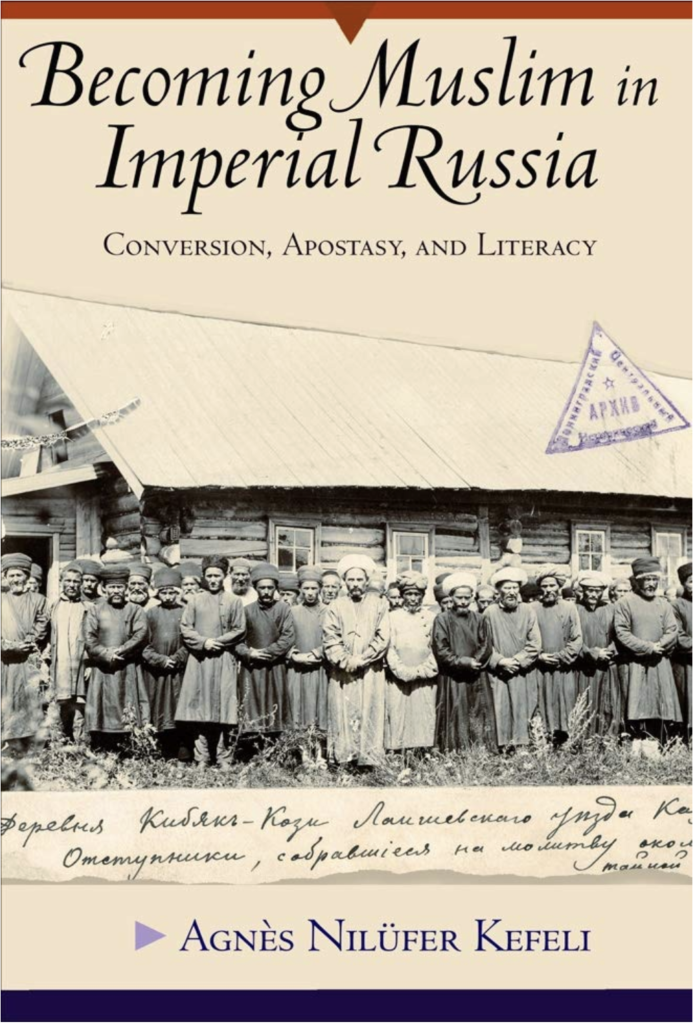
Agnès Nilüfer Kefeli, Becoming Muslim in Imperial Russia - Conversion, Apostasy, and Literacy, Cornell University Press, 2014

In the nineteenth century, the Russian Empire's Middle Volga region (today's Tatarstan) was the site of a prolonged struggle between Russian Orthodoxy and Islam, each of which sought to solidify its influence among the frontier's mix of Turkic, Finno-Ugric, and Slavic peoples. The immediate catalyst of the events that Agnès Nilüfer Kefeli chronicles in Becoming Muslim in Imperial Russia was the collective turn to Islam by many of the region's Kräshens, the Muslim and animist Tatars who converted to Russian Orthodoxy between the sixteenth and eighteenth centuries.

The traditional view holds that the apostates had really been Muslim all along or that their conversions had been forced by the state or undertaken voluntarily as a matter of convenience. In Kefeli's view, this argument vastly oversimplifies the complexity of a region where many participated in the religious cultures of both Islam and Orthodox Christianity and where a vibrant Kräshen community has survived to the present. By analyzing Russian, Eurasian, and Central Asian ethnographic, administrative, literary, and missionary sources, Kefeli shows how traditional education, with Sufi mystical components, helped to Islamize Finno-Ugric and Turkic peoples in the Kama-Volga countryside and set the stage for the development of modernist Islam in Russia. Of particular interest is Kefeli's emphasis on the role that Tatar women (both Kräshen and Muslim) played as holders and transmitters of Sufi knowledge. Today, she notes, intellectuals and mullahs in Tatarstan seek to revive both Sufi and modernist traditions to counteract new expressions of Islam and promote a purely Tatar Islam aware of its specificity in a post-Christian and secular environment.

Type

E-book

Geographical area

Imperial RussiaTatarstanUralVolga Region

Period

19th century20th centuryImperial Russia

Language

English

Keywords

apostasybookconversionliteracymuslim-faithreforms

Published : January 12, 2026

Share this source

Send by email

Share this source by email or save it by sending the data to your mail box.

Newsletter

Receive the latest sources each month

By clicking on the Subscribe button, you confirm that you have read our Data Protection policy.
Logo cnrsLogo ehessLogo cercec

The Online Primary Sources database is curated by
the french Centre for Russian, Caucasian and Central European Studies (CERCEC), a CNRS-EHESS joint research unit.

  • Credits
  • Legal Notice
  • Data Protection