Logo

Online Primary Sources

  • Home
  • All Sources
  • About
  • Newsletter
Filter by
PeriodGeographical areaInstitutionTypeLanguage
  • 17th century (1)
  • 18th century (1)
  • 1917 (1)
  • 1930s (1)
  • 1960s (1)
  • 1970s (1)
  • 1980s (1)
  • 19th century (2)
  • 20th century (13)
  • 21st century (1)
  • August 1991 (1)
  • Battle of Stalingrad (1)
  • Cold War (2)
  • Great Patriotic War (2)
  • Nazi Germany (1)
  • Pre-Revolutionary Period (1)
  • Revolution (2)
  • Soviet Union (9)
  • World War II (4)
  • Afghanistan (1)
  • America (1)
  • Belorussia (1)
  • Central Asia (1)
  • Central Europe (1)
  • China (2)
  • Cuba (1)
  • Eastern Europe (1)
  • German Democratic Republic (1)
  • German Reich (1)
  • Germany (2)
  • Imperial Russia (1)
  • Iran (1)
  • Katyn (1)
  • Korea (1)
  • Moscow (1)
  • Nazi Germany (1)
  • Poland (1)
  • Russia (5)
  • Soviet Union (16)
  • Turkestan (1)
  • Ukraine (1)
  • Dekoder.org (1)
  • GBH Archives (1)
  • German Historical Institute in Moscow (1)
  • Institute of Russian History of the Russian Academy of Sciences (1)
  • Jochen Hellbeck at al. (1)
  • Joel Berkowitz and Debra Caplan (1)
  • Macalester College (1)
  • Max Weber Stiftung (MWS) (1)
  • Michigan State University (1)
  • Private Initiative (2)
  • The Wilson Center (6)
  • Working Women of the East Digital Humanities Project (1)
  • Audio (2)
  • Image (13)
  • Interactive map (1)
  • Listing (1)
  • Pdf (3)
  • Transcript (9)
  • Translation (16)
  • Video (2)
  • English (15)
  • German (3)
  • Russian (13)
  • Ukrainian (1)
  • Yiddish (1)

16 sources found in the database

for Soviet UnionTranslation
  • "Soviet Survivors of Nazi Rule: The First Testimonies" Database


    Max Weber Stiftung (MWS)

  • “East”. Soviet Forced Laborers in the German Reich


    Dekoder.org

  • Digital Yiddish Theatre Project


    Joel Berkowitz and Debra Caplan

  • Public Television and Radio Station WGBH Series of Interviews with Scientists, Politicians, Journalists and Activists from the Soviet Union


    GBH Archives

  • Iran's Tudeh Party Collection


    The Wilson Center

  • Katyn Massacre in Documents


    The Wilson Center

  • Alexander Boguslawski Russian Lubok (Popular Print) Database


    Private Initiative

  • Testimonies of Soviet Survivors of Nazi Occupation


    German Historical Institute in Moscow

    Institute of Russian History of the Russian Academy of Sciences

  • Declassified Sources on Yuri Gagarin


    The Wilson Center

  • Facing Stalingrad. Portrait of German and Soviet Survivors


    Jochen Hellbeck at al.

  • Materials Published in Moscow Daily News & Moscow News in the 1930s


    Private Initiative

  • Cuban Missile Crisis Documents


    The Wilson Center

  • «
  • ‹
  • 1
  • 2
  • ›

Testimonies of Soviet Survivors of Nazi Occupation


Institution

German Historical Institute in MoscowInstitute of Russian History of the Russian Academy of Sciences

Url

https://survivors.hypotheses.org/

Most of the interviews presented here were the work of a group of historians led by the Moscow history professor Isaak Izrailevich Mints. Early on, Mints recognized the historical significance of the Soviet war against the Nazi invaders. By December 1941 he had formed a “Commission on the History of the Great Patriotic War,” with the aim of collecting documents for a vast postwar chronicle of that war. Central to the documentary efforts of the commission was the creation of oral histories. By war’s end, the commission had created close to 4000 interviews with soldiers and civilians, men and women, engaged in the Soviet war effort.  

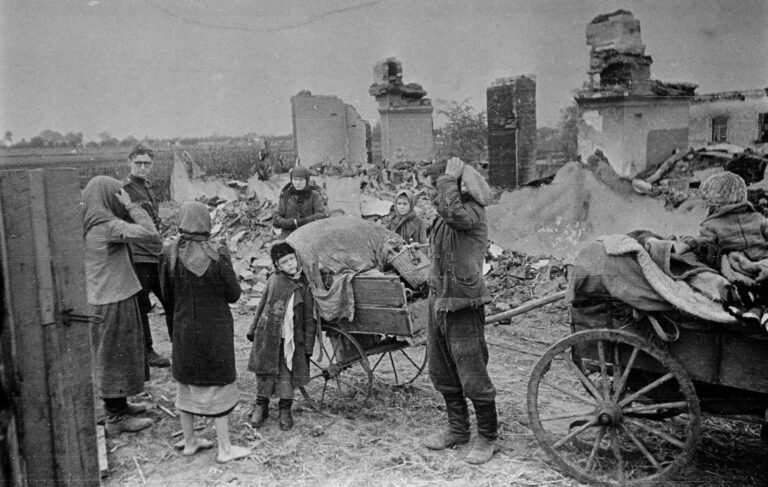
As a distinct chapter of their work, the historians sought to document the Soviet experience of Nazi occupation. Toward this purpose, they dispatched tandem teams of a historian and a stenographer each into regions and towns that had just been liberated by the Red Army.  In smouldering towns and villages throughout western Russia, in Ukraine, Belorussia and elsewhere, the historians gathered testimonies from more than 700 witnesses and survivors of Nazi rule, often within weeks or months of the Germans’ departure. The historians interviewed a wide range of witnesses: teachers, engineers, industrial workers, party officials and peasants; men and women who had fought the Germans as partisans, as well as churchmen who struggled to explain why they had included Adolf Hitler in their public prayers.

The work of the Moscow Commission, also known as the “Central Commission,” spawned further documentary efforts. Later during the war, Ukrainian and Belarus commissions formed in Kiev and Minsk. They closely cooperated with the Moscow historians and adopted their methodology.

The candor and richly shaded texture of the interviews sealed their fate. After war’s end, neither of the commissions that had formed was able to obtain approval for publication from state censors, and the documents they collected disappeared in archives in Russia, Ukraine, and Belarus. They are now presented here for the first time.

Further readings on the work of the Moscow Commission is d: D. D. Lotareva, “Komissiia po istorii Velikoi Otechestvennoi voiny: istoriia sozdaniia, osnovnye etapy I rezul’taty deiatel’nosti,” in: Velikaia Otechestvennaia – izvestnaia i neizvestnaia: istoricheskaia pamiat’ i sovremennost’ (Moscow, 2015), pp. 159-165;  Jochen Hellbeck, “The Antifascist Pact: Forging a First Experience of Nazi Occupation in the Wartime Soviet Union,” Slavonic & East European Review 96.1 (2018), pp. 117-143.

The documents are presented in the original Russian language as well as in English and German translation.

[Illustration: Residents of the Poltava region in front of their destroyed house, 1943. Photographer: Semen Fridlyand. Source: The Dalbey Photographic Collection at the University of Denver.]


Type

TranscriptTranslation

Geographical area

Soviet Union

Period

20th centuryGreat Patriotic WarSoviet UnionWorld War II

Language

EnglishGermanRussian

Keywords

eyewitnessesoccupationoral-historyred-armytestimonies

Published : June 23, 2021

Share this source

Send by email

Share this source by email or save it by sending the data to your mail box.

Newsletter

Receive the latest sources each month

By clicking on the Subscribe button, you confirm that you have read our Data Protection policy.
Logo cnrsLogo ehessLogo cercec

The Online Primary Sources database is curated by
the french Centre for Russian, Caucasian and Central European Studies (CERCEC), a CNRS-EHESS joint research unit.

  • Credits
  • Legal Notice
  • Data Protection