Logo

Online Primary Sources

  • Home
  • All Sources
  • About
  • Newsletter
Filter by
PeriodGeographical areaInstitutionTypeLanguage
  • 15th century (1)
  • 16th century (1)
  • 17th century (2)
  • 18th century (2)
  • 1920s (1)
  • 1989 (1)
  • 19th century (4)
  • 20th century (13)
  • 21st century (3)
  • Holocaust (1)
  • Holodomor, 1931-1933 (1)
  • Soviet Era (1)
  • Soviet Union (1)
  • Warsaw Pact (1)
  • World War II (4)
  • Bulgaria (1)
  • Central Europe (3)
  • Croatia (1)
  • Czech Republic (2)
  • Czechoslovakia (1)
  • East Germany (1)
  • Eastern Europe (4)
  • Estonia (1)
  • Europe (1)
  • Germany (2)
  • Hungary (3)
  • Kazakhstan (1)
  • Kirghizistan (1)
  • Latvia (2)
  • Lithuania (2)
  • Lublin (1)
  • Nazi Germany (1)
  • Poland (13)
  • Romania (2)
  • Russia (4)
  • Russian Empire (1)
  • Slovak Republic (1)
  • Slovakia (1)
  • Soviet Union (3)
  • Ukraine (1)
  • Uzbekistan (1)
  • Biblioteka Multimedialna Teatrnn.pl (1)
  • Bundesarchiv (1)
  • Center for Research on the Ukrainian-Polish-Slovak Borderlands (1)
  • Digital Archive of Memorabilia (1)
  • European University Institute (1)
  • Faculty of Humanities of the Ukrainian Catholic University (1)
  • Imperial War Museums (1)
  • Ministry of Culture and National Heritage, Poland (1)
  • Polish Center for Social Archive (1)
  • Polish State Archive (2)
  • Standford University (1)
  • The "Grodzka Gate – NN Theatre" Centre (1)
  • The “Local History” Project (1)
  • YIVO Institute for Jewish Research (2)
  • Audio (13)
  • Doc file (1)
  • Image (13)
  • Interactive map (1)
  • Listing (1)
  • Pdf (2)
  • Transcript (2)
  • Translation (1)
  • Video (10)
  • Czech (1)
  • English (7)
  • Estonian (1)
  • French (2)
  • German (4)
  • Hebrew (1)
  • Hungarian (1)
  • Latvian (2)
  • Lithuanian (1)
  • Polish (10)
  • Romanian (2)
  • Russian (4)
  • Slovak (1)
  • Yiddish (2)

13 sources found in the database

for PolandAudioImage
  • Stasi Multimedia Library


    Bundesarchiv

  • "Zhiva istoriia / Living History" - Oral History & Visual Sources Project, 1900-2022


    Center for Research on the Ukrainian-Polish-Slovak Borderlands

    Faculty of Humanities of the Ukrainian Catholic University

    The “Local History” Project

  • Database of Community Archive from All Over Poland


    Polish Center for Social Archive

  • Historical Archives of the European Union. Audio-Visual Collections


    European University Institute

  • Stories, Pictures, Films or Other Items Relating to the Events of 1989 in Central & Eastern Europe


    Digital Archive of Memorabilia

  • Digital Archive of the Polish-Soviet War


    Polish State Archive

  • Jewish Life in Lublin Collection


    Biblioteka Multimedialna Teatrnn.pl

    The "Grodzka Gate – NN Theatre" Centre

  • Taube Archive of the International Military Tribunal (IMT) at Nuremberg, 1945-46


    Standford University

  • Portal of the Polish National Archives


    Polish State Archive

  • The Polish Army in the Soviet Union Photo Collection and Testimonies, 1941-1942


    Imperial War Museums

  • The Baltic Digital Library


    Ministry of Culture and National Heritage, Poland

  • YIVO Digital Archive on Jewish Life in Poland


    YIVO Institute for Jewish Research

  • «
  • ‹
  • 1
  • 2
  • ›

Jewish Life in Lublin Collection


Institution

Biblioteka Multimedialna Teatrnn.plThe "Grodzka Gate – NN Theatre" Centre

Url

https://biblioteka.teatrnn.pl/dlibra

History of the “Grodzka Gate – NN Theatre” Centre by Tomasz Pietrasiewicz

The “Grodzka Gate – NN Theatre” Centre is a local government cultural institution based in Lublin. In its activities, the Centre draws on the symbolic and historical significance of its residence, the Grodzka Gate, also known as the Jewish Gate. The Gate used to be a passage from the Christian to the Jewish part of the city, a meeting place of various cultures, traditions and religions.

In 1939 Lublin had nearly 120 thousand citizens, including about 43 thousand Jews. During the Second World War, the Nazis murdered the Jewish inhabitants of Lublin and destroyed the Jewish district. Majdanek, the German Nazi concentration camp located at the outskirts of Lublin, became a grim symbol of that period.

The changes brought about by the fall of communism in Poland in 1989 initiated the process of regaining Memory by the Polish society, and Lublin was among many Polish cities which had to face their forgotten past.

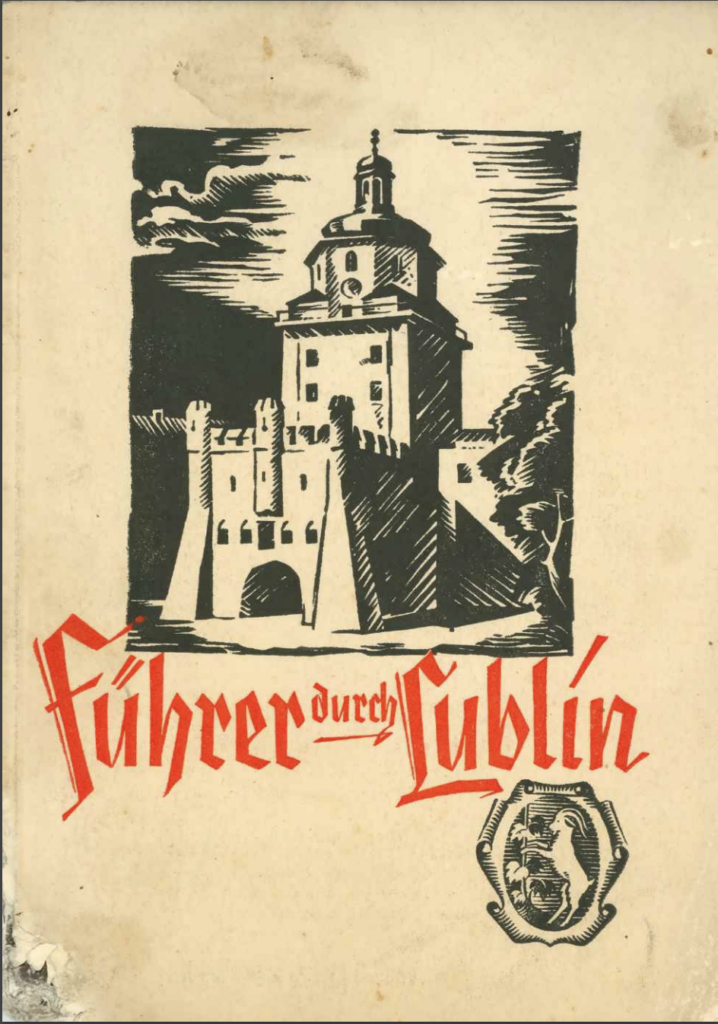
[Illustration: Travel Guide, "Führer through the city of Lublin" by Vandrey, Max Otto ; Schöller, Fritz, Krakow, 1942. Published by the Germans during the occupation, the guide contains 26 pages and around 20 photographs. It was intended to emphasize Lublin's "Germanic character", hence the numerous references in the text to German crafts and trade in Lublin.https://biblioteka.teatrnn.pl/dlibra/publication/29129/edition/28863/content]


Type

AudioImageVideo

Geographical area

LublinNazi GermanyPoland

Period

20th centuryWorld War II

Language

EnglishPolish

Keywords

booksgerman-occupationiconographyjewish-districtjewish-lifejewsmajdanekoral-historyphotographsradio-programsshoahshtetl-routessobibor

Published : January 13, 2024

Share this source

Send by email

Share this source by email or save it by sending the data to your mail box.

Newsletter

Receive the latest sources each month

By clicking on the Subscribe button, you confirm that you have read our Data Protection policy.
Logo cnrsLogo ehessLogo cercec

The Online Primary Sources database is curated by
the french Centre for Russian, Caucasian and Central European Studies (CERCEC), a CNRS-EHESS joint research unit.

  • Credits
  • Legal Notice
  • Data Protection