Logo

Online Primary Sources

  • Home
  • All Sources
  • About
  • Newsletter
Filter by
PeriodGeographical areaInstitutionTypeLanguage
  • 15th century (1)
  • 16th century (1)
  • 17th century (1)
  • 18th century (1)
  • 1939-1945 (1)
  • 20th century (3)
  • 21st century (2)
  • Great Patriotic War (1)
  • Nazi Germany (1)
  • World War II (1)
  • Australia (1)
  • Austria (1)
  • Balkans (1)
  • Baltic States (1)
  • Belarus (1)
  • Belgium (1)
  • Bosnia (1)
  • Bulgaria (2)
  • Croatia (5)
  • Czech Republic (2)
  • Czechoslovakia (1)
  • Estonia (2)
  • France (2)
  • Germany (2)
  • Herzegovina (1)
  • Hungary (1)
  • Italy (1)
  • Kosovo (2)
  • Latvia (2)
  • Lithuania (1)
  • Macedonia (2)
  • Moldova (1)
  • Netherlands (1)
  • Norway (1)
  • Poland (2)
  • Romania (2)
  • Russia (3)
  • Serbia (4)
  • Slovakia (2)
  • Slovenia (3)
  • Switzerland (1)
  • Ukraine (3)
  • USA (1)
  • Alexander Petcherski Foundation (1)
  • Centropa (1)
  • Museum of Russia Abroad in Moscow (1)
  • The Special Commission on the Computer-Supported Processing of Mediæval Slavonic Manuscripts and Early Printed Books to the International Committee of Slavists (1)
  • United Nations (1)
  • Image (4)
  • Interactive map (1)
  • Links (1)
  • Listing (1)
  • Pdf (1)
  • Transcript (5)
  • Video (1)
  • Bosnian (1)
  • Bulgarian (1)
  • Croatian (2)
  • English (2)
  • French (1)
  • German (1)
  • Hungarian (1)
  • Macedonian (1)
  • Russian (3)
  • Serbian (2)
  • Ukrainian (1)

5 sources found in the database

for CroatiaTranscript
  • "Nepokorennye/The Unconquered" Project - A History of Resistance in Nazi Occupation Camps


    Alexander Petcherski Foundation

  • Online Biographical Encyclopedia of Famous Russian Emigrés


    Museum of Russia Abroad in Moscow

  • Testimonies of Jewish Holocaust Survivors Still Living in Central and Eastern Europe, the former Soviet Union and the Balkans, 2000-2010


    Centropa

  • Documents & Testimonies from the International Criminal Tribunal for the former Yugoslavia


    United Nations

  • Catalogues & Collections of Slavonic Manuscripts


    The Special Commission on the Computer-Supported Processing of Mediæval Slavonic Manuscripts and Early Printed Books to the International Committee of Slavists

  • «
  • ‹
  • 1
  • ›

Documents & Testimonies from the International Criminal Tribunal for the former Yugoslavia


Institution

United Nations

Url

https://www.icty.org/en

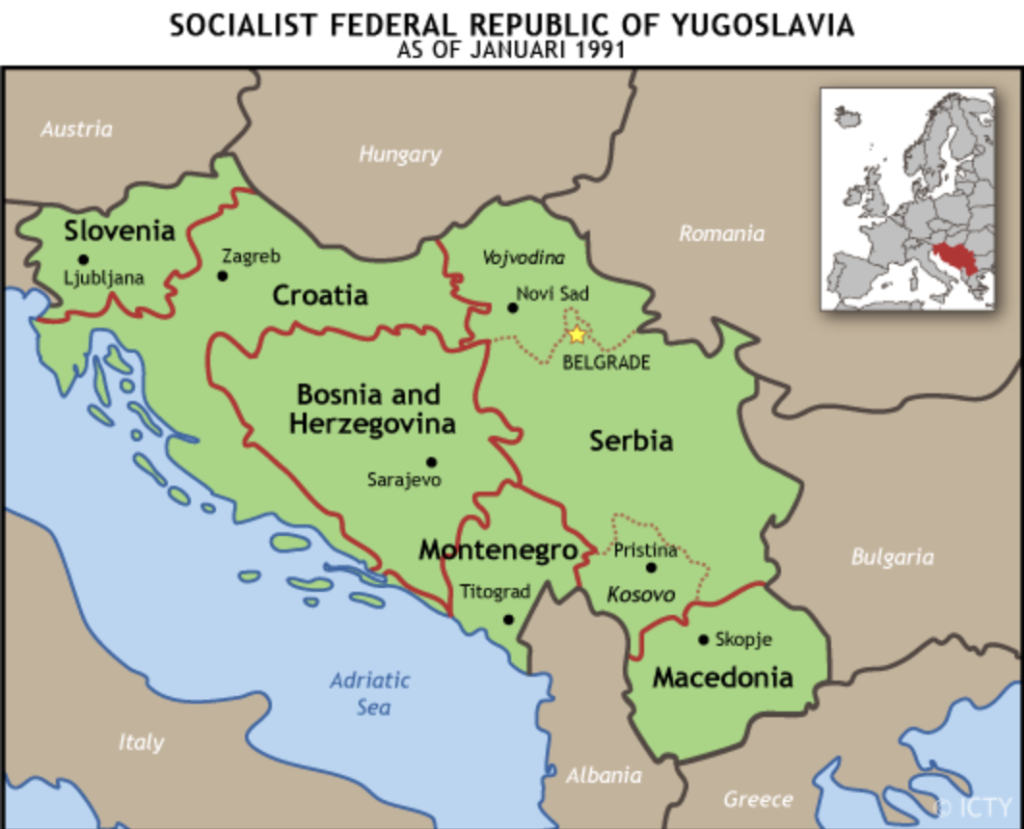
The International Criminal Tribunal for the former Yugoslavia (ICTY) is a United Nations court of law dealing with war crimes that took place during the conflicts in the Balkans in the 1990’s. Since its establishment in 1993, it has irreversibly changed the landscape of international humanitarian law and provided victims an opportunity to voice the horrors they witnessed and experienced.

In its precedent-setting decisions on genocide, war crimes and crimes against humanity, the Tribunal has shown that an individual’s senior position can no longer protect them from prosecution.

It has now shown that those suspected of bearing the greatest responsibility for atrocities committed can be called to account, as well as that guilt should be individualised, protecting entire communities from being labelled as “collectively responsible”.

The Tribunal has laid the foundations for what is now the accepted norm for conflict resolution and post-conflict development across the globe, specifically that leaders suspected of mass crimes will face justice. The Tribunal has proved that efficient and transparent international justice is possible.

The Tribunal has contributed to an indisputable historical record, combating denial and helping communities come to terms with their recent history. Crimes across the region can no longer be denied. For example, it has been proven beyond reasonable doubt that the mass murder at Srebrenica was genocide.

Judges have also ruled that rape was used by members of the Bosnian Serb armed forces as an instrument of terror, and the judges in the Kvočka et al. trial established that a “hellish orgy of persecution” occurred in the Omarska, Keraterm and Trnopolje camps of northwestern Bosnia.

While the most significant number of cases heard at the Tribunal have dealt with alleged crimes committed by Serbs and Bosnian Serbs, the Tribunal has investigated and brought charges against persons from every ethnic background. Convictions have been secured against Croats, as well as both Bosnian Muslims and Kosovo Albanians for crimes committed against Serbs and others.


Type

ImagePdfTranscriptVideo

Geographical area

BosniaCroatiaHerzegovinaKosovoMacedoniaSlovenia

Period

20th century21st century

Language

BosnianCroatianEnglishFrenchMacedonianSerbian

Keywords

casesconflictscrimes-against-humanitydocumentsgenocidesguilty-pleasmapstestimoniesvictimswar-crimes

Published : February 05, 2021

Share this source

Send by email

Share this source by email or save it by sending the data to your mail box.

Newsletter

Receive the latest sources each month

By clicking on the Subscribe button, you confirm that you have read our Data Protection policy.
Logo cnrsLogo ehessLogo cercec

The Online Primary Sources database is curated by
the french Centre for Russian, Caucasian and Central European Studies (CERCEC), a CNRS-EHESS joint research unit.

  • Credits
  • Legal Notice
  • Data Protection