
Communal Living in Russia - A Virtual Museum of Soviet Everyday Life
This Web site--an online ethnographic museum--explores and explains a striking social phenomenon: the Soviet "kommunalka," or communal apartment. Instituted after the Bolshevik Revolution of 1917, the kommunalka was a predominant form of housing for generations. By the 1970s, these crowded and uncomfortable apartments began to empty out in a noticeable way. But even now, when their location the most fashionable central districts of large Russian cities make them hot targets for real-estate buyouts, many remain in place, with life ordered in much the same way as it always was. On this site, we show video clips of ongoing communal apartments and their inhabitants, shot in St. Petersburg in 2006. There are also audio interviews, photographs, documents, commentaries, and explanations of many different kinds.
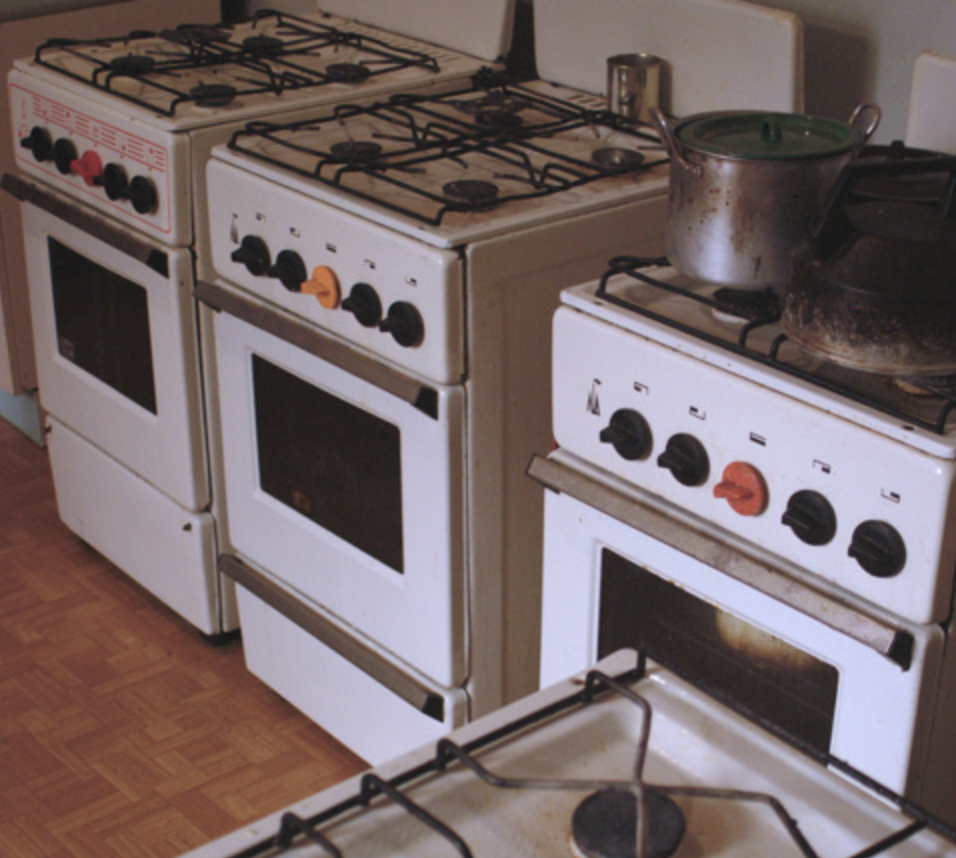
The communal apartment is unusual because it brought together families of vastly different educational backgrounds, attitudes, ethnicities, and life habits. These people had nothing in common except for the intimate spaces that they shared. Usually, each family lived in one room, with the kitchen, hallway, lavatory, and—in later years—bathroom, as highly contested public spaces. Communal living was the combined result of rapid urbanization and explicit social policy. New housing construction in Russian cities could never keep up with the massive population influx from rural areas, which increased dramatically with Soviet industrialization campaigns. Revolutionary goals of suppressing the bourgeoisie and nurturing the Soviet "new man," who was supposed to be trained to participate joyously in collective existence, led to this quintessential form of Soviet private life.
Beginning in the late 1950s, the government began building housing projects at the outskirts of major cities. People could get apartments there, generally through their places of work. But waiting lists for those "private" apartments (the adjective meant "not communal") were very long, and for decades many residents of "kommunalki" found themselves stuck in their small rooms in these overcrowded urban flats.
Forced to cope, residents devised a variety of strategies for maintaining order, for defending their own personal spaces, and for negotiating control over spaces that were shared. The resulting way of life was a core experience for generations of Russians, and is background, and sometimes foreground, to all of Soviet high culture.
The foundations of this project lie in the extensive research that was carried out by Ilya Utekhin (European University, St. Petersburg, Russia) in the late 1990s and culminated in 2001 in the publication of his Essays on Communal Living (second edition: Ob"edinennoe gumanitarnoe izdatel'stvo [OGI], Moscow, 2004).The first Internet version of Muzej Kommunal'nogo Byta (a Virtual Museum of Communal Living) was created in 2000 by Ilya Utekhin, Katya Gerasimova, and Vladimir Sharykhin at http://old.kommunalka.spb.ru/.The current work began in the summer of 2006 when Slawomir Grunberg filmed the tours and interviews conducted for this project by Ilya Utekhin in several communal apartments in St. Petersburg and continued through the better part of 2008. When you read this text, our virtual museum offers 45 short video clips (5 to 7 minutes), 364 photographs, 12 audio interviews, and 46 one-page essays created specifically for this site, plus a number of documents and other materials.
Published : September 04, 2020