
Altneu-Kokush Auschwitz Photographs
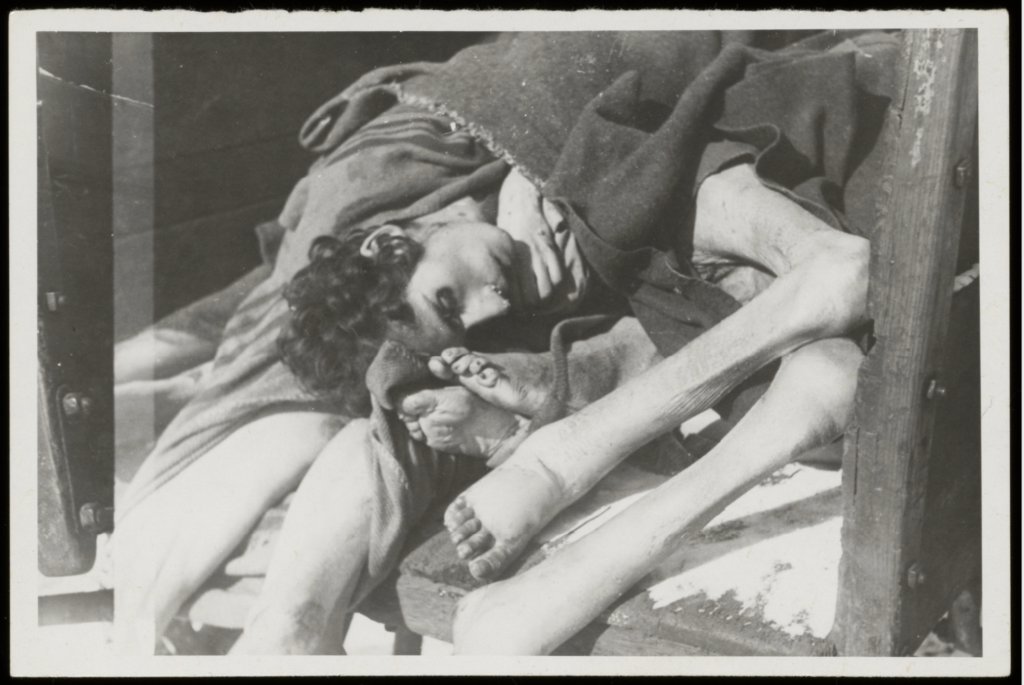
The Altneu-Kokush Auschwitz Photographs collection consists of 126 photographs primarily of the Auschwitz-Birkenau concentration and death camps, which were liberated by the Red Army on January 27, 1945. The majority of these photographs were taken several weeks after liberation by the Central Forensic Laboratory of the Red Army, which was a subdivision of the Extraordinary State Commission to Investigate German-Fascist Crimes Committed on Soviet Territory from the USSR (ChGK), formed in November 1942.
The ChGK included photographers, doctors, and forensic investigators, who interviewed survivors and photographed both survivors and crime scenes to gather evidence for what would eventually become the Nuremberg Trials. By the time members of the commission arrived at Auschwitz, they had two years of experience documenting and presenting Nazi crimes for both domestic and international audiences. These photographs were part of that effort to hold the Nazis accountable for their crimes, but they were also part of the Soviets’ attempt to inscribe their own meaning on these events.
The photographs document the work of the commission, the physical evidence that they gathered, victims of the camps, and a ceremony to honor the dead. There are also several images of the liberation of the camp staged several weeks after the actual liberation (these images are marked as such in the item descriptions).
The collection’s photographs appear to be duplicates of the private “Bryzhin” album, named for Fedor Bryzhin (1900–1977), chief forensic expert of the 1st Ukrainian Front and head of the commission. The album is kept at the Military Medical Academy of Defense in Saint-Petersburg, Russia.
Yuri Kokush and the Altneu Synagogue generously loaned the collection to the Blavatnik Archive for storage and digitization in 2023. It was cataloged by the scholar of Soviet film and photography Irina Porte Tcherneva, who identified and contextualized the photographs, with assistance from historians Nathalie Moine and Tal Bruttmann, as well as the specialists at the Auschwitz Memorial Jacek Lachendro, Halina Zdziebko, and Robert Płaczka.
Keywords
Published : October 20, 2026