
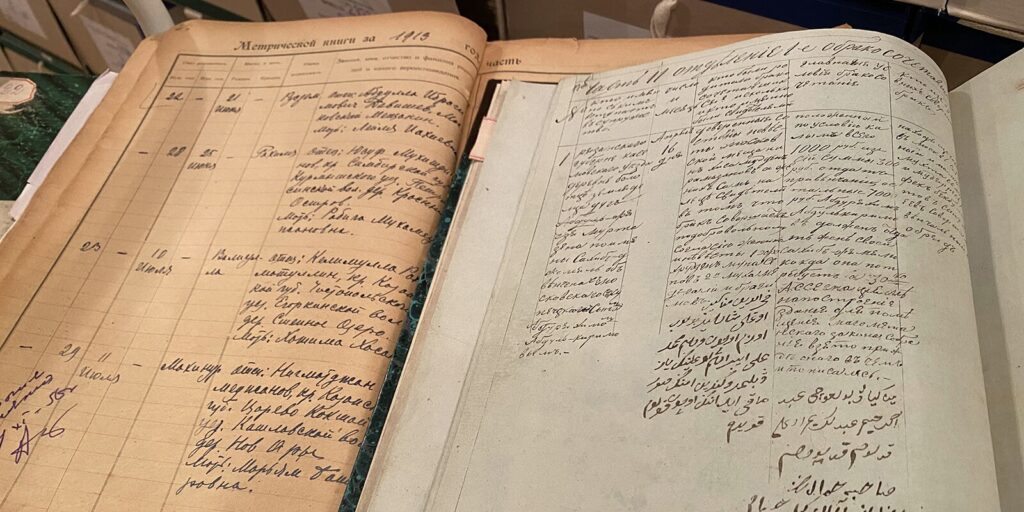
Muslim Metric Books of Moscow Mosques, 1836-1917
The online service of the Moscow City Archive "My Family" begins to add islamic metric books.
The order of administering civil status documents concerning Muslims was established in 1828, when the Senate issued a decree "On introducing the use of metric books for the Orenburg Mohammedan Spiritual Administration". To fulfill it, 700 roubles were allocated from the state treasury as a lump sum (by comparison, it cost about two thousand roubles to rent a house in the center of Moscow for a year). The means were intended for distributing metric books or notebooks to Muslim parishes. Two copies were sent to each.
At first the Islamic metric notebooks consisted of three parts, or "note books," viz: "note books" of births, "combinations and divorces" of marriages, and of the dead. Later, the part on marriages and divorces was divided into two. If an imam knew Russian, he wrote in Russian; if he didn't, he was allowed to write in Tatar. The Orthodox metric books were taken as a basis for Islamic metric books, with the only difference that the Orthodox metric books didn't have a column about divorces.
Islamic metric books began with a section on the deceased, where the name, age, date, month and cause of death were recorded. This section also indicated where the person died and was buried, but not the name of the cemetery, but only the place of death - the city of Moscow.
Published : November 18, 2021