
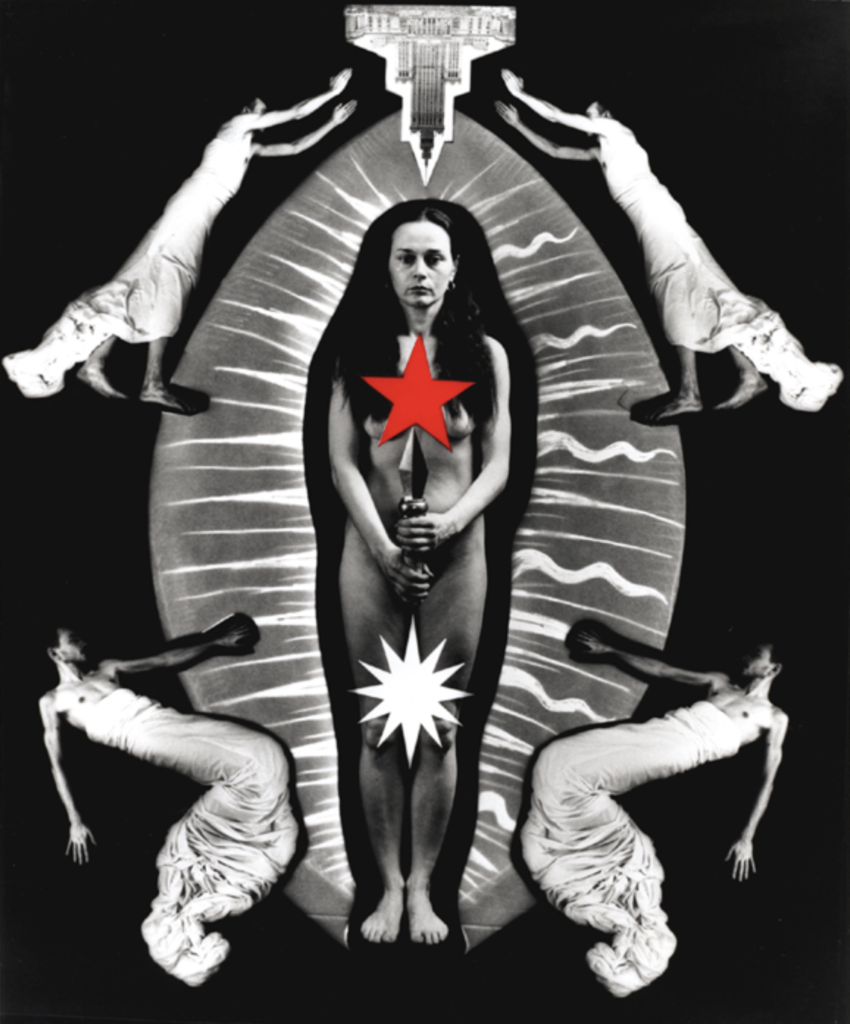
KwieKulik - Zofia Kulik and Przemysław Kwiek Art Collection
The artistic duo Zofia Kulik and Przemysław Kwiek called KwieKulik (1971-1987) is one of the most important artistic phenomena of post-war Polish art. KwieKulik's work is radically unique in the history of the neo-avantgarde in Central Europe, thanks to their socio-political engagement and their uncompromising, bold criticism of their surrounding reality. They produced different forms of archives, films, object installations and performed actions. The aim was to develop an art, understood as a process, on the threshold between daily experience and aesthetic practice. In their private living space KwieKulik continuously removed the boundaries between art and life, by creating their own 'underground' laboratory, in which they organised a series of lectures, screenings and exhibitions, resulting in the formation of the self-organised micro-institution PDDiU (Studio for Art Activities, Documentation and Propagation); this become the platform and documentation centre for the independent and unofficial art scene in socialist Poland. KwieKulik aimed to make art political once more. The authorities reacted with censorship and a travel ban.
KwieKulik activity has been researched and re-discovered recently. Their works were presented in Documenta 12 in Kassel (2007) and Istanbul Bienniale (2009). The first, major monograph edited by Łukasz Ronduda and Georg Schöllhammer will be published later this year.
The presentation of KwieKulik at the Art Feature Art 42 Basel reveals an extraordinary creative practice which merged innovative conceptual artistic actions with work made for money, commissioned by state agencies. In the reality of the communist economy, hackwork - designing and manufacturing occasional decorations, propaganda banners, and commemorative plaques - was the only source of income for artists whose "real" art, namely subversive and neo-avangarde practices, was marginalized and eliminated by the official cultural policy of the state. In the 1970's KwieKulik entered into a conscious and sophisticated game with the system of state sponsorship and control of artistic life. The actions from the Earning Money and Making Art series were invented when the artists were working on their commissioned orders - they began to grow on them, like parasite. Earning Money and Making Art was about a simultaneous production of hackwork and then using it as a basis for the artists' own projects. This was one of the unique creative methods developed by KwieKulik. In contrast to many other neo-avangarde artists active at that time in the former socialist block countries, KwieKulik were able to appropriate the oppressive propaganda apparatus, making it work for them, and refute the secure escapism of art in lieu of an open confrontation with hostile systems. KwieKulik's works, which are formally extraordinary and highly discursive in comparison to the conceptual strategists of that time, still remain extremely relevant and inspiring. They again reveal the strength and potential of artistic creation against the traps of institutionalization and commercialization of art.
[Work in progress]
Published : November 08, 2021