
Archive of Near East Relief Work Towards Armenians, 1915-1990
The Near East Foundation’s institutional records are housed at the Rockefeller Archive Center in Tarrytown, NY. Our collection consists of documents and images from 1915 to the late 1990s. The bulk of our materials relate to NEF’s work from the 1940s – 1980s.
However, there are several boxes of materials from the Near East Relief era. These include photographs, documents, letters, drawings, scrapbooks, and assorted publications. Some of the materials are extremely fragile, and their use is at the discretion of the archivists. The collection has not yet been arranged by date or subject matter. The NEF collection is open to researchers by appointment.
Our records contain very little information on the Armenian, Assyrian, and Anatolian Greek Genocide itself. While that event gave rise to the founding of our organization, Near East Relief focused on rescue, rehabilitation, and development in the aftermath of the Genocide.
We have almost no information on individual children. We do not have lists of names of children that lived in specific orphanages. However, the archives provide an excellent overview of Near East Relief’s work and are always of great interest to family historians and researchers.
From Barclay Acheson’s collection, he labelled these papers “general stories prior to Armistice”. Dated between 1915 and 1916, these letters contain eyewitness accounts of the massacres and deportations, as well as urgent pleas in response to the unfolding humanitarian crisis. https://neareastmuseum.com/resources/early-reports-and-letters/
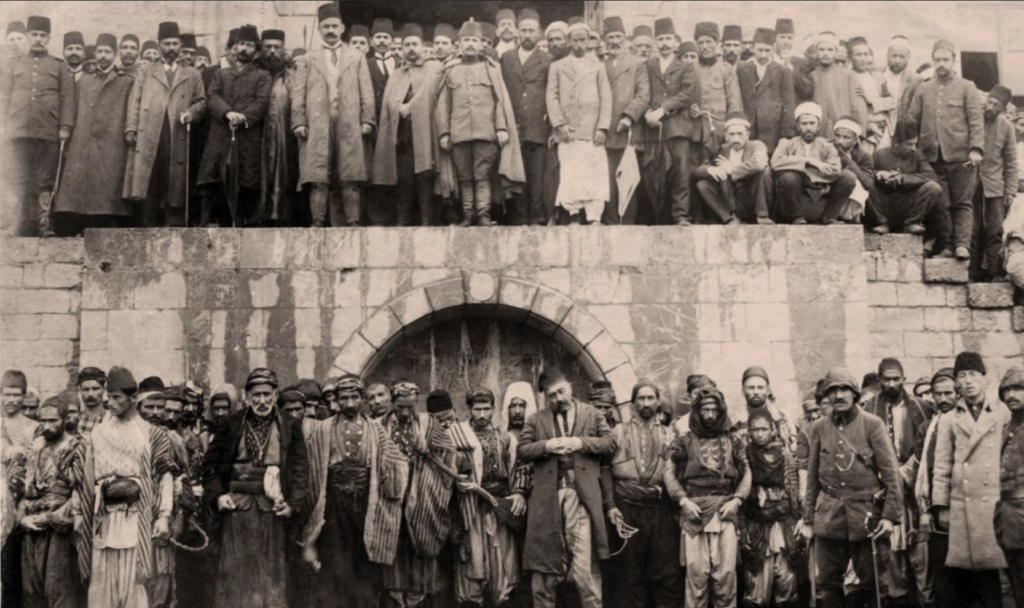
[Illustration : The Committee of Union and Progress (CUP) blamed the Armenians for the CUP’s disastrous attempt to invade Russia in December 1914. The CUP accused Armenians of collaborating with the Russian army. The Ottoman government used the failed invasion as a pretext for a plan to destroy the Ottoman Armenian population. The first deportations took place in the city of Zeitun on April 8, 1915. Men were marched out of town and executed. Women and children were forced from their homes and loaded into railroad cars bound for the desert. The Zeitun deportations served as a training event for the Ottoman killing squads.]
Keywords
Published : January 31, 2024