
The highest number of people escaped in autumn 1944, when many of our compatriots were forced to escape in fear of repressions and the approaching front, while hoping to return home soon.
Unfortunately, the separation ended up lasting decades, and many were never able to return.
Despite great public interest in the matter during the past decades, we still do not have a clear overview of the number of refugees, their origin, nor their social background. The current historiography states that approximately 80,000 persons fled Estonia, but other figures have also been proposed.
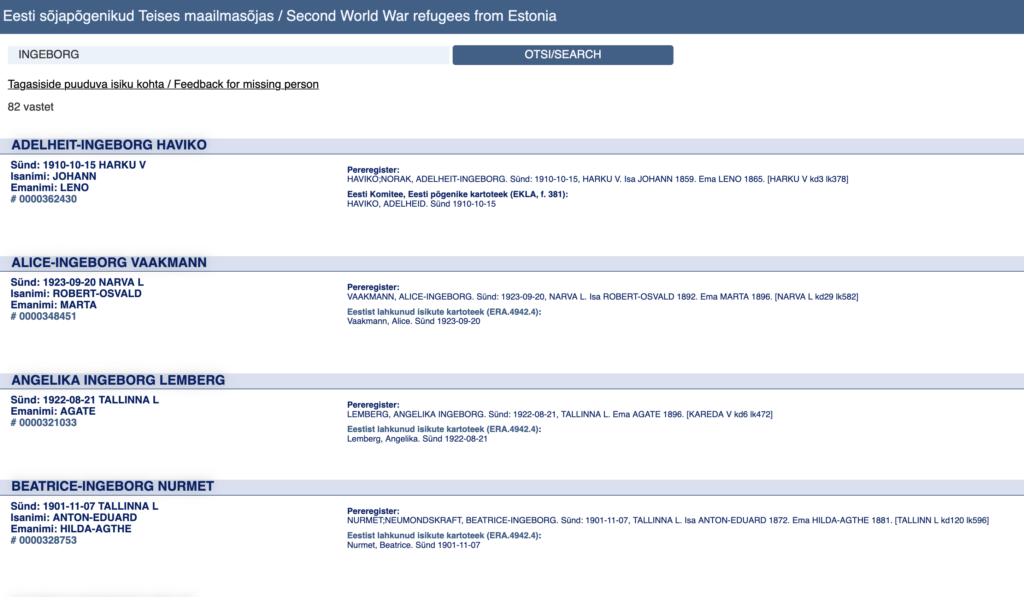
The Estonian Institute of Historical Memory will thus establish a new database of persons that fled Estonia during the Second World War. The patron of this new endeavour is President of the Republic of Estonia Alar Karis. The database creates a necessary foundation for further research, and tells the story of our previous generations.
In the first stage, we will focus on the refugees’ first destinations – Sweden and Germany. We endeavour to compile a primary database of refugees using existing directories in archives. However, we will need people’s help in collecting the names of those refugees who went missing on the journey.