
Russian-Arab Worlds Archival Documents
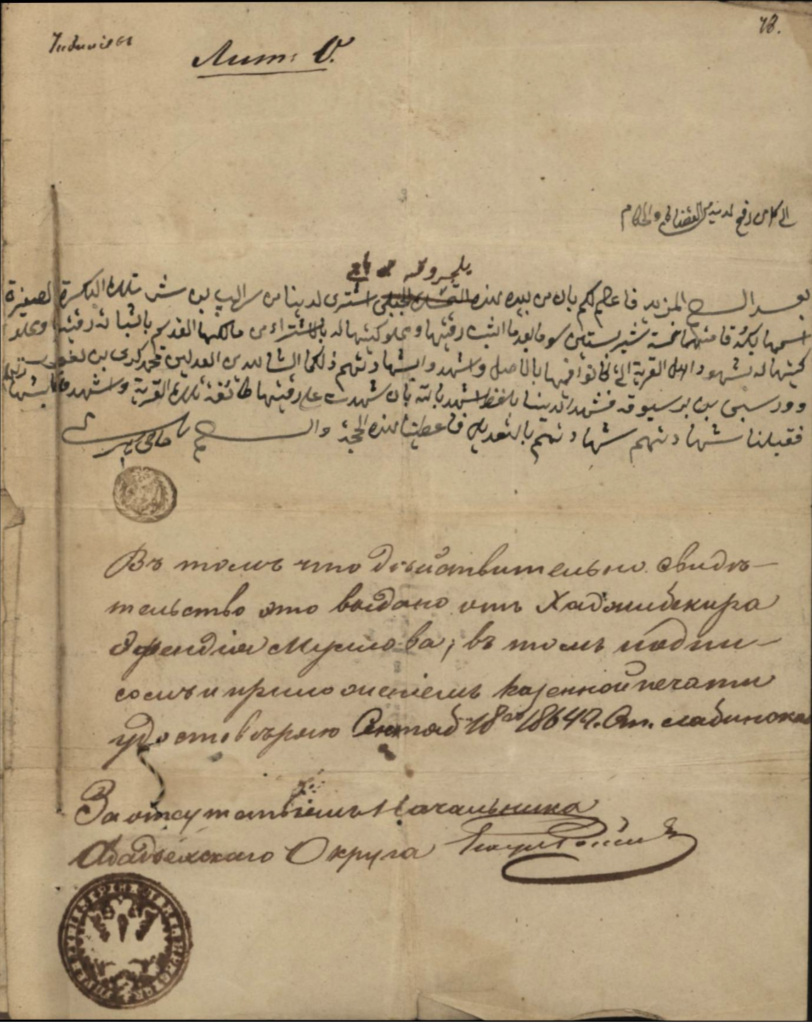
The roots of the Arab world’s current Russian entanglements reach deep into the tsarist and Soviet periods. To explore those entanglements, the book Russian-Arab Worlds: A Documentary History presents and contextualizes a set of primary sources translated from Russian, Arabic, Armenian, Persian, French, and/or Tatar: a 1772 Russian naval officer’s diary, an Arabic slave sale deed from the Caucasus, an interview with a Russian-educated contemporary Syrian novelist, and many more (all documents availabla on-line). These archival, autobiographical, and literary sources, introduced by specialists and in some cases by pairs of scholars with complementary language expertise, highlight connections long obscured by disciplinary cleavages between Slavic and Middle East studies. Taken together, the 34 chapters of this book show how various Russian/Soviet and Arab governments sought to nurture political and cultural ties and expand their influence, often with unplanned results. They reveal the transnational networks of trade, pilgrimage, study, ethnic identity, and political affinity that state policies sometimes fostered and sometimes disrupted. Above all they give voice to some of the resourceful characters who have embodied and exploited Arab-Russian contacts: missionaries and diplomats, soldiers and refugees, students and party activists, scholars and spies. A set of new maps helps orient readers amid the expansion and collapse of empires, border changes, population transfers, and creation of new nation-states that occurred during the two centuries these sources cover.
[Illustration: A Slave Sale Deed from Russia's North Caucasus (1864)]
Published : February 22, 2023