
The Sobibór Uprising: Documents, Photos, Pictures, Texts
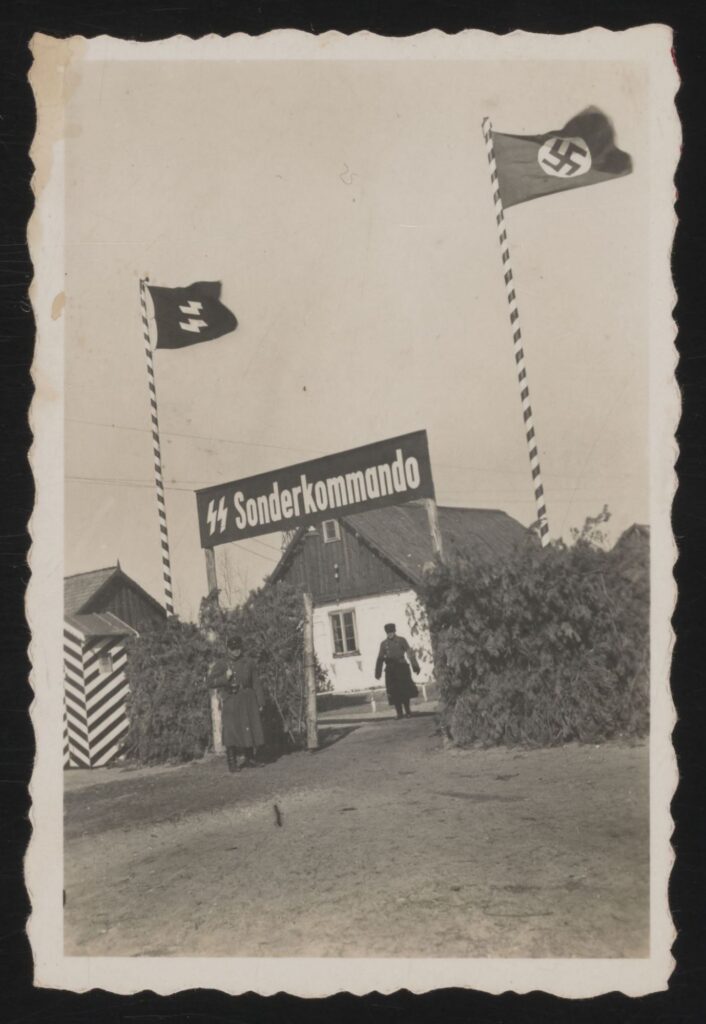
In the last decade the history of the extermination camp Sobibór and the fate of the leaders of the October 14, 1943 uprising Alexander Pechersky and Leon Felgendler have been in the center of public attention. Several new books, documentaries, and the feature film "Sobibor" (2018) have been released. Pechersky and other participants of the uprising were awarded Russian, Polish, and Ukrainian orders, streets around the world were named after them, and politicians and statesmen started talking about them. In 2020, a new museum was opened on the site of the former camp. The feat of the prisoners of Sobibor became a symbol of human willingness to fight the inhuman machine of destruction for life and freedom in the most unthinkable conditions, on the brink of death.
The idea for this project was born a few years ago by representatives of the State Archive of the Russian Federation and the Alexander Pechersky Foundation. At that time they decided to gather in one place all documents from Russian state and departmental archives, as well as the most significant materials from the collection of the Alexander Pechersky Foundation, and thus create a "virtual archive" of Sobibor. Other countries' archives were also involved in the project, such as the National Archives of the Republic of Belarus, the German Federal Archives (Bundesarchiv) and the Museum of Ghetto Fighters (Israel), etc.
The compilers are currently presenting the first four sections of the project. The publication of the last two sections has been postponed because a significant portion of the documents comprising Section 5, on the persecution of Nazi criminals after the war, is still being declassified. The 6th section, telling about the memorialization of Sobibor from the 1950s to the present time will complete the publication.
The project was supervised by:
Coordinators: deputy director of GA RF L.N. Malashenko, chairman of the board of the Alexander Pechersky Foundation I.Yu. Vasiliev
Edelshtein M.Yu. (Lomonosov Moscow State University).
Compilers: M.J. Edelshtein, O.V. Lavinskaya (GARF)
Consultant: M.G. Matskevich (FNISC RAS)
Translations: E.L. Kiseleva, E.V. Balushkina (GARF)
Computer layout and design: P.A. Slovyagin (GARF)The creators of the project would like to thank:
S.A. Bogdanova, M.I. Zhbannikova, V.V. B. Nemtsev, S.V. Pashkov, M.J. Posadskaya, S.V. Romanov, N.K. Svanidze, M.G. Sukalskaja, A.L. Taranov, N.A. Trapsh, H.G. Umarov.Kuzma Kozak, Natalia Yatskiewicz (Belarus), David Bezmozgis (Canada), Marek Bem, Jakub Chmielewski (Poland), Lea Hirsch, Anna Kopaeva, Lazar Lubarski (Israel), Joshua Wangthoff, Ingrid Zylstra (Netherlands), the M. A. Lev, as well as the families of A. A. Pechersky, E. V. Litvinovsky, Thomas Blatt, Moshe Bahir, and other participants in the uprising.
Published : October 27, 2021