
The Lodz Ghetto Photographs of Henryk Ross
During the final liquidation of the Lodz Ghetto, Ross buried his negatives with other artifacts in the ground to preserve the photographic record he had created. Some inhabitants remained in the ghetto after the final liquidation to close down the factories, clean up and sort possessions. In January, 1945 as the Red Army approached Lodz the Germans ordered the remaining residents to dig mass graves. Instead, they went into hiding. There were 877 still hiding in the camp when the Red Army liberated Lodz on January 19, 1945. Henryk Ross, and his wife Stefania, were among them.
Following the liberation of the ghetto, Ross excavated the box of negatives and recovered this extraordinary archive. Although significant material was damaged, almost 3,000 negatives survived—the most comprehensive known collection of Holocaust ghetto photographs by a single Jewish photographer.
Ross’s work was preserved through an act of will. They demonstrate photography’s ability to bear witness to history and serve as a catalyst for change; to foster sympathy, awareness, and even critical commentary. Ross’s photographs aim to capture the events he witnessed—though the stories they tell are still open to new understandings.
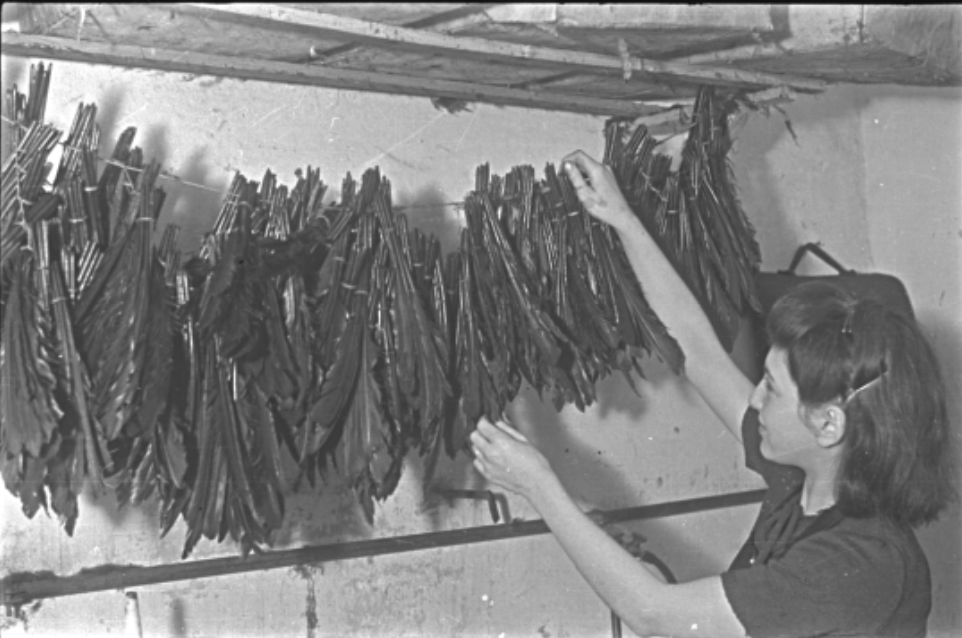
[Illustration: A woman hanging feathers for hats in a ghetto workshop ("ressort")]
Published : September 15, 2021